Blog

The Economics of Bicycles for the Mind

Abstract #

Steve Jobs described computers as “bicycles for the mind,” a tool that allowed people to dramatically leverage their capabilities. This paper presents a formal model of cognitive tools and technologies that enhance mental capabilities. We consider agents engaged in iterative task improvement, where cognitive tools are assumed to be substitutes for implementation skills and may or may not be complements to judgment, depending on their type. The ability to recognise opportunities to start or improve a process, which we term opportunity judgment, is shown to always complement cognitive tools. The ability to know which action to take in a given state, which we term payoff judgment, is not necessarily a complement to cognitive tools. Using these concepts, we can synthesise the empirical literature on the impact of computers and artificial intelligence (AI) on productivity and inequality. Specifically, while both computers and AI appear to increase productivity, computers have also contributed to increased inequality. Empirical work on the impact of AI on inequality has shown both increases and decreases, depending on the context. We also apply the model to understand how cognitive tools might influence incentives to automate processes and allocate decision-making authority within teams.

Best Youtube Downloader

The best YouTube downloaders:

  • The best YouTube downloader for Windows is Stacher. It’s free, open-source, and simple. It’s an easy-to-use graphical application that does the setup for you.
  • The best YouTube downloader for the command line is yt-dlp.
  • The best YouTube downloader for Android is NewPipe. This third-party YouTube app has a built-in download tool.
  • The best YouTube downloader for web based is Cobalt , can be self deployed

Source: https://windowsread.me/p/best-youtube-downloaders

The Well: a Large-Scale Collection of Diverse Physics Simulations for Machine Learning

Abstract #

Machine learning based surrogate models offer researchers powerful tools for accelerating simulation-based workflows. However, as standard datasets in this space often cover small classes of physical behavior, it can be difficult to evaluate the efficacy of new approaches. To address this gap, we introduce the Well: a large-scale collection of datasets containing numerical simulations of a wide variety of spatiotemporal physical systems. The Well draws from domain experts and numerical software developers to provide 15TB of data across 16 datasets covering diverse domains such as biological systems, fluid dynamics, acoustic scattering, as well as magneto-hydrodynamic simulations of extra-galactic fluids or supernova explosions. These datasets can be used individually or as part of a broader benchmark suite. To facilitate usage of the Well, we provide a unified PyTorch interface for training and evaluating models. We demonstrate the function of this library by introducing example baselines that highlight the new challenges posed by the complex dynamics of the Well. The code and data is available at this URL.

Great Firewall of China Leak

Source: https://gfw.report/blog/geedge_and_mesa_leak/en/

1. Introduction #

The Great Firewall of China (GFW) experienced the largest leak of internal documents in its history on Thursday September 11, 2025. Over 500 GB of source code, work logs, and internal communication records were leaked, revealing details of the GFW’s research, development, and operations.

The leak originated from a core technical force behind the GFW: Geedge Networks (whose chief scientist is Fang Binxing) and the MESA Lab at the Institute of Information Engineering, Chinese Academy of Sciences. The documents show that the company not only provides services to governments in places like Xinjiang, Jiangsu, and Fujian, but also exports censorship and surveillance technology to countries such as Myanmar, Pakistan, Ethiopia, Kazakhstan, and other unidentified country under the “Belt and Road” framework.

Tongyi DeepResearch: A New Era of Open-Source AI Researchers

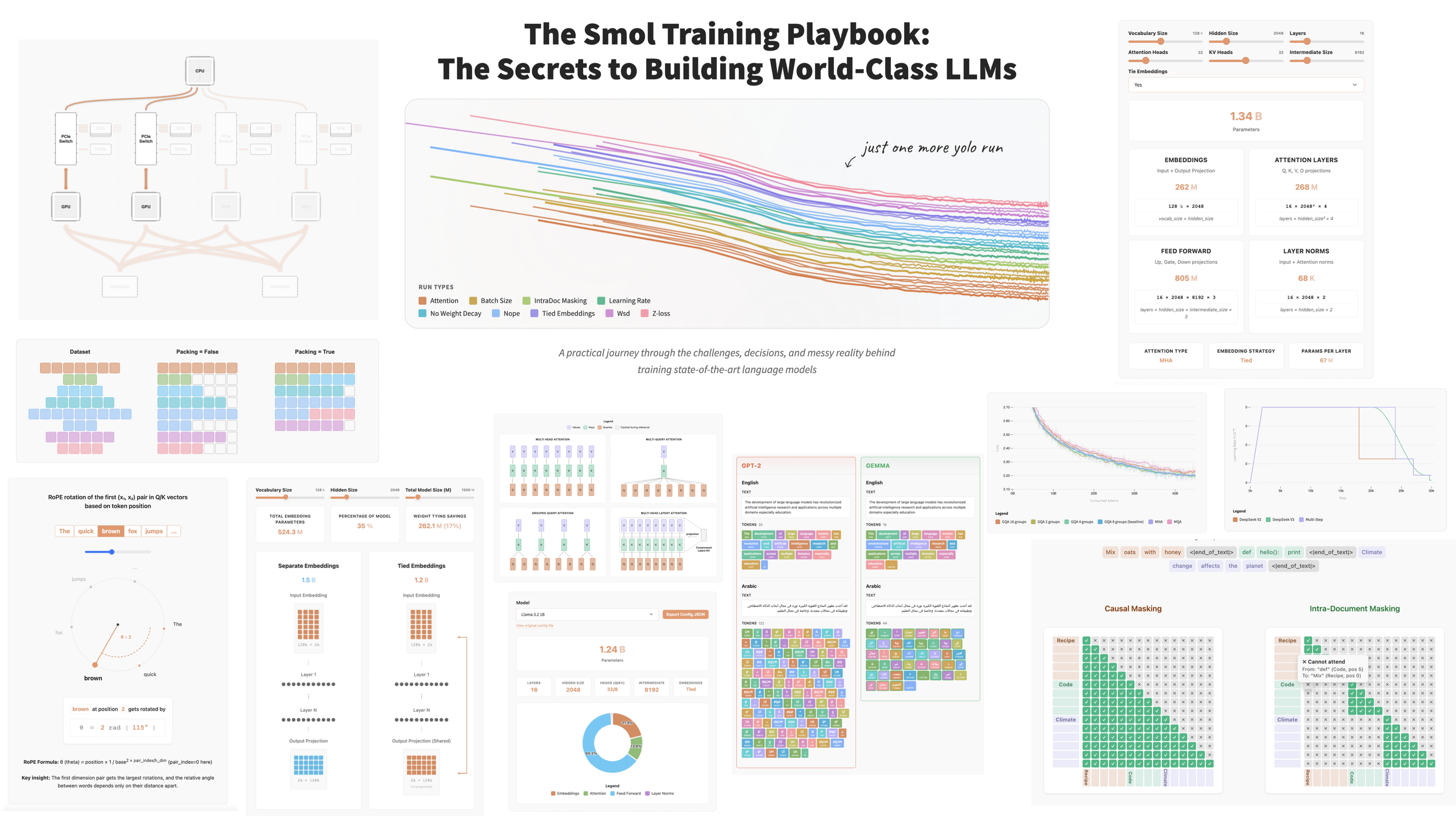
alt the smol training playbook

From Chatbot to Autonomous Agent #

We are proud to present Tongyi DeepResearch, the first fully open-source Web Agent to achieve performance on par with OpenAI’s DeepResearch across a comprehensive suite of benchmarks. Tongyi DeepResearch demonstrates state-of-the-art results, scoring 32.9 on the academic reasoning task Humanity’s Last Exam (HLE), 43.4 on BrowseComp and 46.7 on BrowseComp-ZH in extremely complex information‑seeking tasks, and achieving a score of 75 on the user-centric xbench-DeepSearch benchmark, systematically outperforming all existing proprietary and open-source Deep Research agents.

Cara Menghitung Hari Dalam Tahun

Kadang-kadang kita perlu mengetahui suatu tanggal itu hari ke berapa dalam suatu tahun. Berikut ini cara menghitungnya dengan bahasa Python.

from datetime import datetime, timedelta
day_of_year = 265
start_of_year = datetime(2025, 1, 1)
target_date = start_of_year + timedelta(days=day_of_year - 1)
weekday_num = target_date.weekday()+1
print("weekday num", weekday_num)